Introduction
The automotive world got a pleasant surprise this spring when Mercury rolled out the 2026 M100 Pickup. It is a clear statement that heritage and high‑tech can share the same chassis. By weaving unmistakable retro cues into a modern platform, Mercury aims to give drivers the emotional connection of a classic truck while delivering the performance, safety, and convenience expected of a 2026 model. The result is a vehicle that feels as comfortable at a downtown coffee stop as it does on a weekend escape to the mountains.
What the 2026 Mercury M100 Pickup Represents
At its core, the 2026 M100 is a reinterpretation of the beloved M100 series that first appeared on American roads in the late 1960s. The silhouette, the chrome‑filled grille, and the squared‑off cargo bed are all faithful nods to the original. Yet beneath that nostalgic exterior lies a fully contemporary engineering package: a range of efficient powertrains, an advanced chassis, and a suite of driver‑assistance technologies that meet today’s safety standards. Mercury designed the truck for two distinct audiences—collectors who crave a piece of automotive history and everyday buyers who need a reliable, versatile pickup for work and play.
Exterior Design and Styling
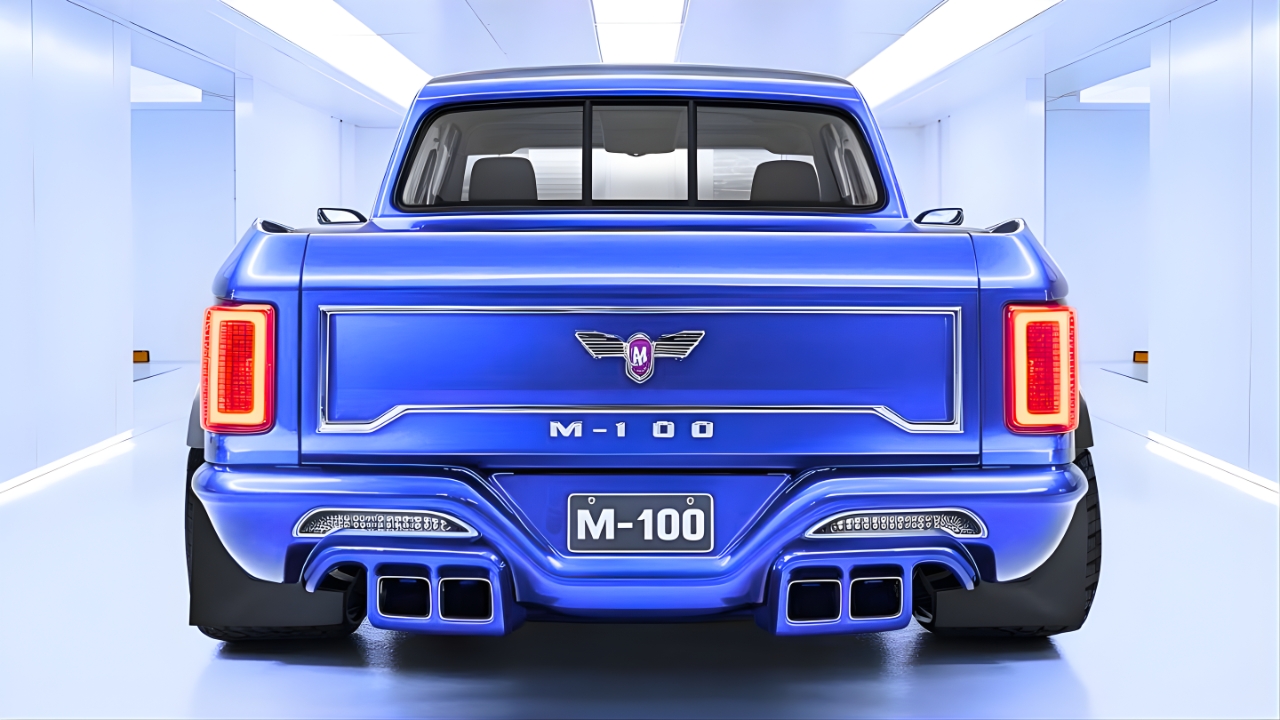
The front fascia immediately catches the eye with a wide, chrome‑topped grille that mirrors the 1970s styling language. LED projector headlights sit within the classic “coke‑bottle” frame, delivering bright, focused illumination while preserving the retro look. Body panels are sculpted with a muscular confidence, but the lines are softened by modern aerodynamic touches—integrated side mirrors, a discreet rear spoiler, and subtle under‑body panels that improve airflow.
Optional paint finishes include two‑tone combinations reminiscent of the era’s hot‑rod culture, while 20‑inch machined‑aluminum wheels give the truck a contemporary stance. The cargo bed, while visually faithful to its predecessor, benefits from a high‑strength steel frame, a weather‑resistant liner, and a smart tailgate that can be opened manually, electrically, or with a foot sensor for hands‑free loading.
Interior Craftsmanship and Comfort
Step inside, and the cabin blends vintage charm with present‑day ergonomics. The dashboard retains a simple, analog‑inspired layout, but every gauge is now a high‑resolution digital display that can be customized for speed, fuel economy, or towing data. Soft‑touch leather seats are available in classic tan or modern black, both featuring lumbar support and heating elements.
The center console houses a 12‑inch touchscreen that controls infotainment, climate, and vehicle settings. Dual‑zone climate control ensures the driver and passenger can set individual temperature preferences, while ample storage compartments—including a hidden glove box and door pockets—keep everyday items within reach. Ambient lighting, available in three selectable colors, adds a subtle modern flair without breaking the retro vibe.
Technology Suite
Even though the M100 leans heavily on its heritage, it does not shy away from connectivity. Apple CarPlay and Android Auto come standard, allowing seamless smartphone integration for navigation, music, and messaging. Wireless Apple‑CarPlay, over‑the‑air software updates, and a built‑in Wi‑Fi hotspot keep the cabin future‑ready.
A premium 10‑speaker audio system, tuned by a well‑known audio brand, delivers clear, balanced sound throughout the cabin. For drivers who value convenience, the M100 offers keyless entry, push‑button start, and a wireless charging pad placed centrally on the console.

Powertrain Choices and Performance
The 2026 M100 is offered with three powertrain options. The base model houses a 2.0‑liter turbocharged four‑cylinder that produces 190 hp and 250 Nm of torque, paired with an eight‑speed automatic transmission. This setup emphasizes fuel economy and city agility.
The mid‑range trim steps up to a 3.5‑liter V6 delivering 280 hp and 380 Nm, while the top‑end configuration features a 5.0‑liter V8 crossing the 400‑horsepower threshold, ideal for serious towing and off‑road excursions. All engines meet stringent emissions standards thanks to direct injection, variable valve timing, and an advanced exhaust treatment system.
An optional four‑wheel‑drive system with a low‑range transfer case provides additional traction for rugged terrain, and a selectable driving mode dial lets the driver toggle between Comfort, Sport, and Off‑Road settings.
Driving Dynamics and Ride Quality
Mercury has tuned the suspension to balance the classic truck’s sturdy feel with modern comfort. The front adopts an independent double‑wishbone arrangement, while the rear uses a multi‑link setup that can be equipped with leaf springs for higher payloads. Damping is electronically controlled, allowing the system to adapt to road conditions in real time.
Steering feels precise, aided by electric power assistance that reduces effort at low speeds and provides a stable feel on the highway. Braking performance benefits from larger ventilated discs up front and rear, complemented by an integrated electronic brake‑force distribution system.
Practicality and Cargo Capabilities
The cargo bed measures 5.5 feet in length and 5.0 feet in width, with a payload capacity of up to 1,650 lb in the V8 configuration. Integrated tie‑down anchors, a removable bed liner, and a recessed power outlet help turn the bed into a functional work platform.
Optional accessories include a dual‑function tonneau cover that can be raised for vertical storage, LED work lights mounted on the bed rails, and a sliding drawer system for tools and small equipment. The bed’s smart tailgate can be opened with a push of a foot pedal, an RFID key, or via the vehicle’s mobile app.
Fuel Efficiency and Environmental Considerations
Despite the presence of a high‑output V8, the M100 maintains respectable fuel consumption figures thanks to cylinder deactivation, start‑stop technology, and a lightweight high‑strength steel body. EPA estimates place the turbo‑four at 28 mpg combined, the V6 at 24 mpg, and the V8 at 20 mpg.

Mercury has integrated a new particulate filter and selective catalytic reduction system across the range, ensuring the truck meets Euro 6 and U.S. Tier 3 emissions requirements. Drivers who opt for the hybrid‑assist package (available only on the V6) benefit from an additional 3 mpg combined and reduced CO₂ output.
Safety Suite and Driver Assistance
Safety is a cornerstone of the 2026 M100. Standard equipment includes an eight‑airbag system, traction and stability control, and a rear‑view camera. Advanced driver‑assist features are bundled into the “M‑Assist” package, which comes as standard on the V6 and V8 models. The package offers adaptive cruise control with stop‑and‑go, lane‑keeping assist, blind‑spot monitoring with rear cross‑traffic alert, and forward‑collision warning with automatic emergency braking.
A 360‑degree panoramic camera system provides a bird’s‑eye view when maneuvering in tight spots, while a parking‑assist algorithm can steer the vehicle into parallel or perpendicular spaces under driver supervision.
Pricing and Market Positioning
Mercury has positioned the 2026 M100 as a premium‑yet‑accessible offering. The base turbo‑four model starts at $34,990, the V6 begins at $38,990, and the V8 starts at $44,990. Optional packages—such as the luxury interior trim, off‑road suspension, and hybrid assist—add between $2,500 and $6,500.
The pricing strategy places the M100 directly against the midsize pickups from Ford, Chevrolet, and Jeep, but its distinct retro design and upscale interior set it apart from the crowd. Mercury anticipates a strong appeal to buyers who value aesthetic individuality as much as capability.
Competition Landscape
In the current midsize segment, notable rivals include the Ford Maverick, Chevrolet Colorado, and Jeep Gladiator. While those models excel in efficiency and off‑road cred, the M100 differentiates itself through its heritage styling, a more refined cabin, and a broader range of powertrain options.
The Gladiator offers a convertible top, which the M100 does not, but the pickup’s sophisticated interior and advanced safety suite give it an edge for family‑oriented buyers. Meanwhile, the Maverick’s hybrid powertrain is a direct competitor to the M100’s hybrid‑assist package, prompting potential buyers to compare fuel‑economy numbers closely.
Bottom Line
The 2026 Mercury M100 Pickup successfully marries the romance of a bygone era with the expectations of today’s drivers. Its mixture of classic exterior cues, a thoughtfully designed interior, a versatile powertrain lineup, and a comprehensive safety suite makes it a compelling choice for both nostalgia seekers and practical users.

If you appreciate a vehicle that tells a story while delivering modern reliability, the M100 stands out as a uniquely balanced offering in a crowded segment. Its combination of style, substance, and technology hints at a future where automotive heritage no longer has to compromise on progress.
Frequently Asked Questions
1. How much cargo can the M100 tow?
The towing capacity varies by powertrain. The turbo‑four can tow up to 4,500 lb, the V6 up to 6,500 lb, and the V8 up to 8,000 lb when equipped with the optional tow package.
2. Is the infotainment system compatible with over‑the‑air updates?
Yes. The 12‑inch touchscreen receives OTA updates, ensuring the latest navigation maps, bug fixes, and feature enhancements are delivered without a dealer visit.
3. Does the M100 offer a diesel engine option?
Currently, Mercury does not provide a diesel powertrain for the 2026 M100. The lineup focuses on gasoline and a hybrid‑assist option for the V6.
4. What warranty coverage does Mercury provide?
The M100 comes with a four‑year/50,000‑mile basic warranty, a six‑year/70,000‑mile powertrain warranty, and a five‑year/60,000‑mile corrosion perforation warranty.
5. Can the rear tailgate be opened remotely via a smartphone app?
Yes. The Mercury mobile app allows owners to open and close the tailgate, lock or unlock doors, and even start the engine remotely, provided the vehicle is equipped with the optional connectivity package.
Disclaimer
The information presented here reflects Mercury’s official releases and publicly available data as of December 2025. Specifications, pricing, availability, and feature sets are subject to change without notice. Prospective buyers should verify details with an authorized Mercury dealership or the company’s official website before making a purchase decision.
